FilmSpooler

Analog Photography…Toy, Lomo and Vintage

Using 120 film in a Kodak Six-16 Brownie Junior

What Happened:

I was on Ebay, not too long ago, looking for any camera that was 1) affordable and 2) different from most of the analog cameras I’ve been buying.  I forgot what search words I used, but whatever it was, I ended up on a page with two Kodak Six-16 Brownie Juniors up for bid.   In the end, I ended paying around $25 for both of them, with shipping.

Kodak Six-16 Brownie Junior

When I got the cameras I realized where they got their names from.  They both use 616 film.  At first I thought that buying these cameras was a mistake, however, with help from Google, I found out there were ways to get 120 film to work in them.

Yay!

A Little Background:

Eastman Kodak came out with the Brownie Junior Six-16 in 1934, originally sold it for $2.75 and then discontinued it in 1942.

It’s 5″ tall, 3.25″ wide and 5.5″ deep.

The Six-16 used 616 film which was discontinued in 1984 in favor of 120 film.

There are two view finders on the Six-16; one on top for portrait shots and one one the side so you can take landscape shots.

f/Stops for both aperture settings are f/11 (tab down) and f/16 (tab up) and the shutter includes a bulb mode (tab out).
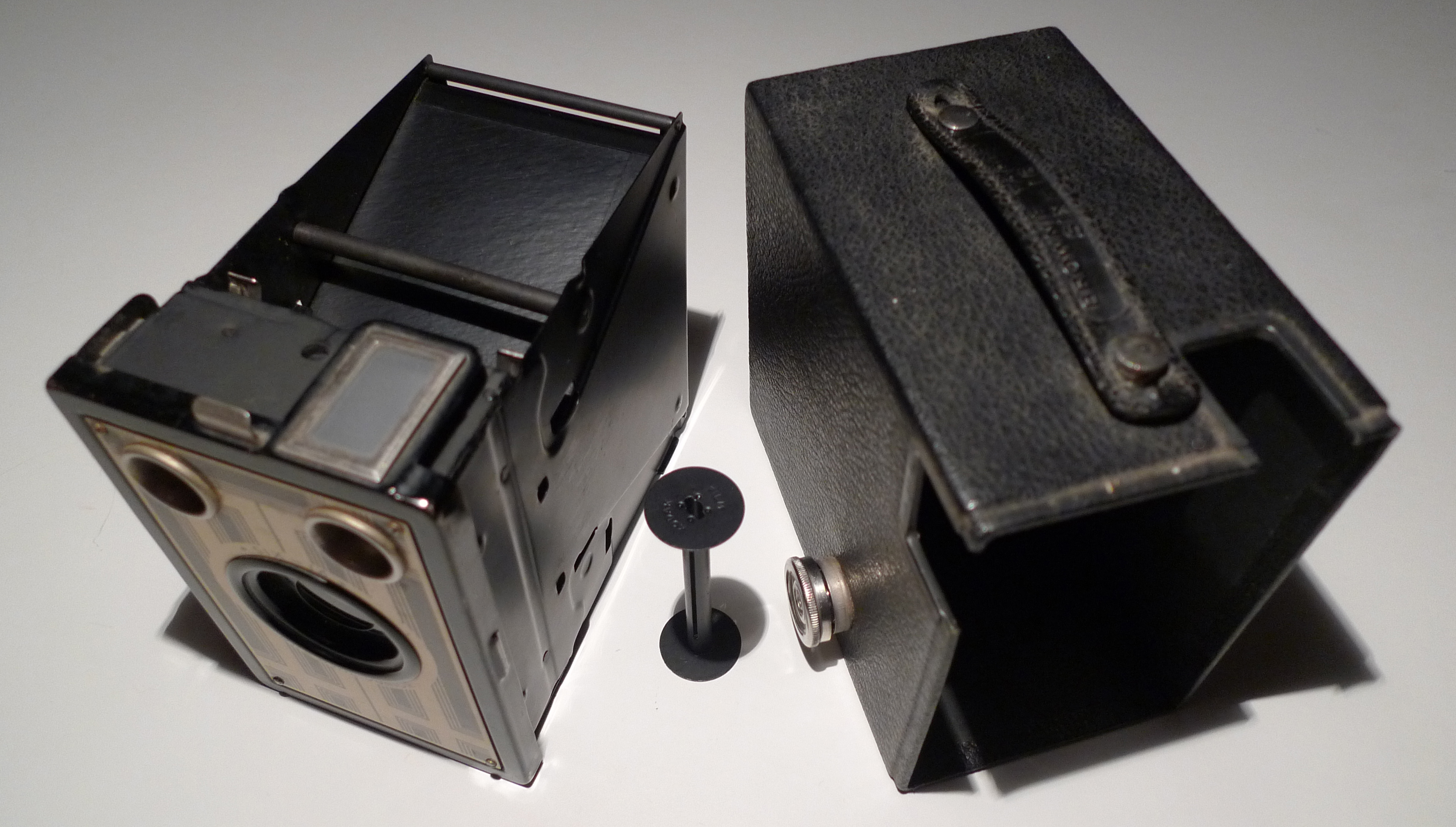
The metal frame, the 616 spool and the cardboard body covered in leatherette.

What To Do First:

First thing I did was clean decades worth of dust, dirt and contaminants on the mirrors and the lenses.  After unscrewing and removing the faceplate, I was able to access and cleaning the insides of the viewfinders and lenses.  I spruced up the mirrors and glass with a cotton swab and microfiber cloth.

These cameras were in really good shape.  The main frame is metal while the external body is made out of pretty thick cardboard.  Most of the camera was cleaned with a dry microfiber cloth and some patience.

Using 120 Film:

Fortunately, both cameras came with one empty 616 spool each, but still, I didn’t have any 616 film available.
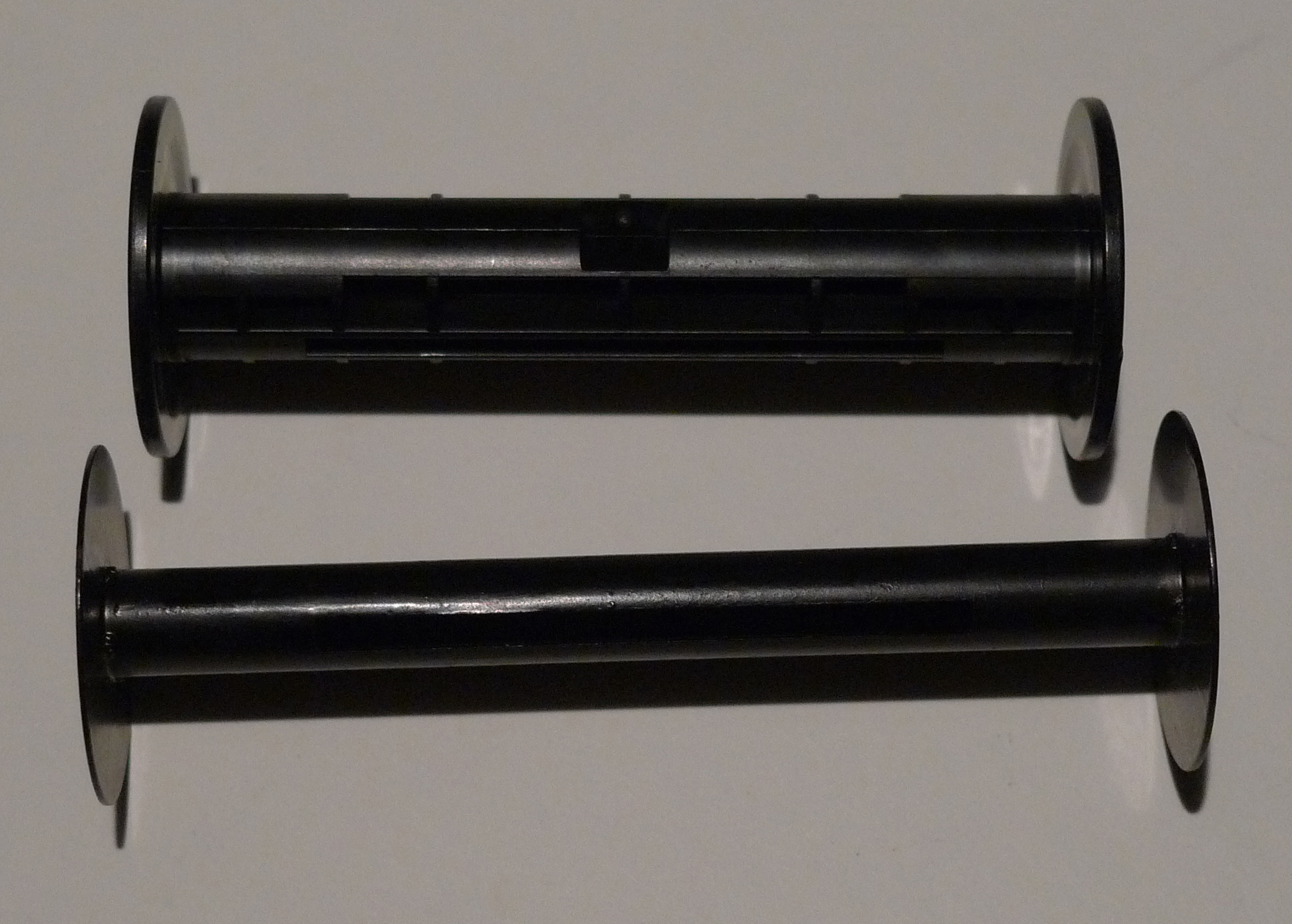
Above 120 Film Spool, Below 616 Film Spool

I went online and I saw that folks were able to take pictures with the Six-16 using 12o film rolls, however the 120 spools are shorter and have thicker stems.  After realizing that I just needed some spacers, I started tinkering around with washers and coins.  Eventually, I found that a couple of taped quarters on both ends of the 120 film spools make great spacers.  In the end, the quarters trick worked, but only on the film spool side of the camera.  The take-up side has a piece of knob that fits in the 616 spool, so using quarters would block the knob from doing it’s job.
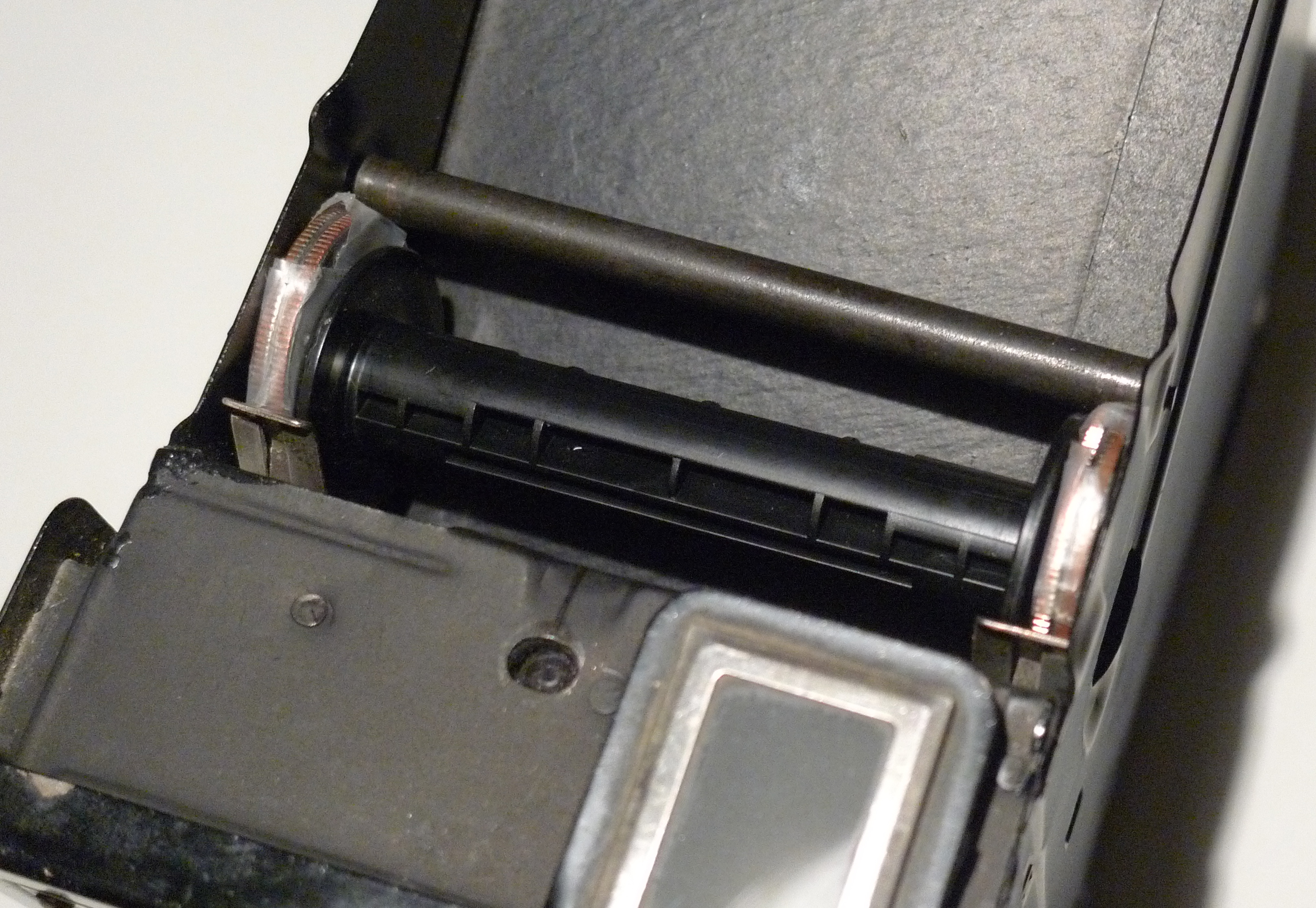
Put the quarters on the film spool side at the top of the camera and 616 spool in the take-up section at the bottom.

Because of the large exposures being taken, and especially for the first frame, I loaded the film in the dark so that parts of the picture (frames 1 and 2) wouldn’t get any light.   As for frame counting on the 120 film, I shot at every three frames giving me five pictures total.  The order was 3, 6, 9, 12 and  15 .

After shooting all your film, go back to the darkroom and roll the film back to the 120 spool and take it to get developed.  I say to do this because 616 film spools are hard to find and you wouldn’t want to accidentally give away such an important piece of hardware to your photo developer.

The Test Run:

Here are a few pictures I took with the Kodak Six-16 Brownie Junior on 120 film.  Not bad, eh?

Shoreline at Torrance Beach, CA

Sunset at Redondo Beach, CA

Fox Theater in Westwood, California

Filed under: Reviews, Tip, Vintage Camera, , , , , , , , , ,

My Lomokino Rig

Having fun with a new camera is great, but I really needed to find a way to get a better handle on a painful situation…(pun intended)

My Lomokino Rig

Hello Lomokino:

A few weeks ago, the Lomography store in LA had a Red Carpet Event party for their latest camera, the Lomokino Movie Maker.  Like the movie film cameras of old, the Lomokino shoots sequential frames with a manual wind of its take-up crank.  What’s neat, aside from being able to shoot a series of continuous frames, is that it uses 35mm film!  For just under $80, I saw it as a great buy that would be fun to try out.

The Lomokino

Throughout the party, the folks at the store were running around taking pictures of the event with Lomokinos in hand, but since it was night,  they used the Fritz the Blitz flash, cable and adapter to get their shots. I took notice of the way that they were holding the cameras and the flash while cranking away at the Lomokino and…it looked kind of uncomfortable.  I didn’t think much about it since we were having a lot of fun…so much fun, that I bought a La Sardina camera with the Fritz the Blitz flash and the optional adapter kit, to boot.

La Sardina - El Capitan Edition

The Problem:

The next day, I unboxed my Lomokino, loaded some film into it and started shooting around my apartment.  For the dark spots, I mounted the Lomokino on the Fritz the Blitz adapter and hooked up the camera to the flash unit.  I then set the flash to it’s lowest level and was able to get three to four lit frames off of one solid charge on the flash.  Using either of the two other higher settings on the flash sucks up the charge too fast and makes you wait for the next full re-charge.

Well, after about 5 or so minutes, my hands were getting tired.  The square shape of the Lomokino isn’t the most ergonomic design that Lomography has put out.  That, plus having to hold the adapter and Fritz the Blitz flash, as well, didn’t make things any easier either.  Then I remembered the Lomography staff and how they had to keep cranking away all night taking pictures of the event.  If they were in pain, they hid it well (or had plenty of breaks in between).

…and that’s when I went to Google…

The Parts:

Since I already had the Fritz the Blitz adapter, Flash and Lomokino camera, the only thing I was missing was a handle.  I figured that someone out there had a handle with a mount screw that would fit the adapter, so before I worried about any other little parts I had to find the right grip.

Once found and ordered, this is what I ended up needing to build out my “rig”:

  • One Barska Accu Grip Hand Held Mount – It’s contoured and shaped for a good solid grip and has a nice rubbery coating that’s easy to hold.

Barska Accu Grip Hand Held Mount

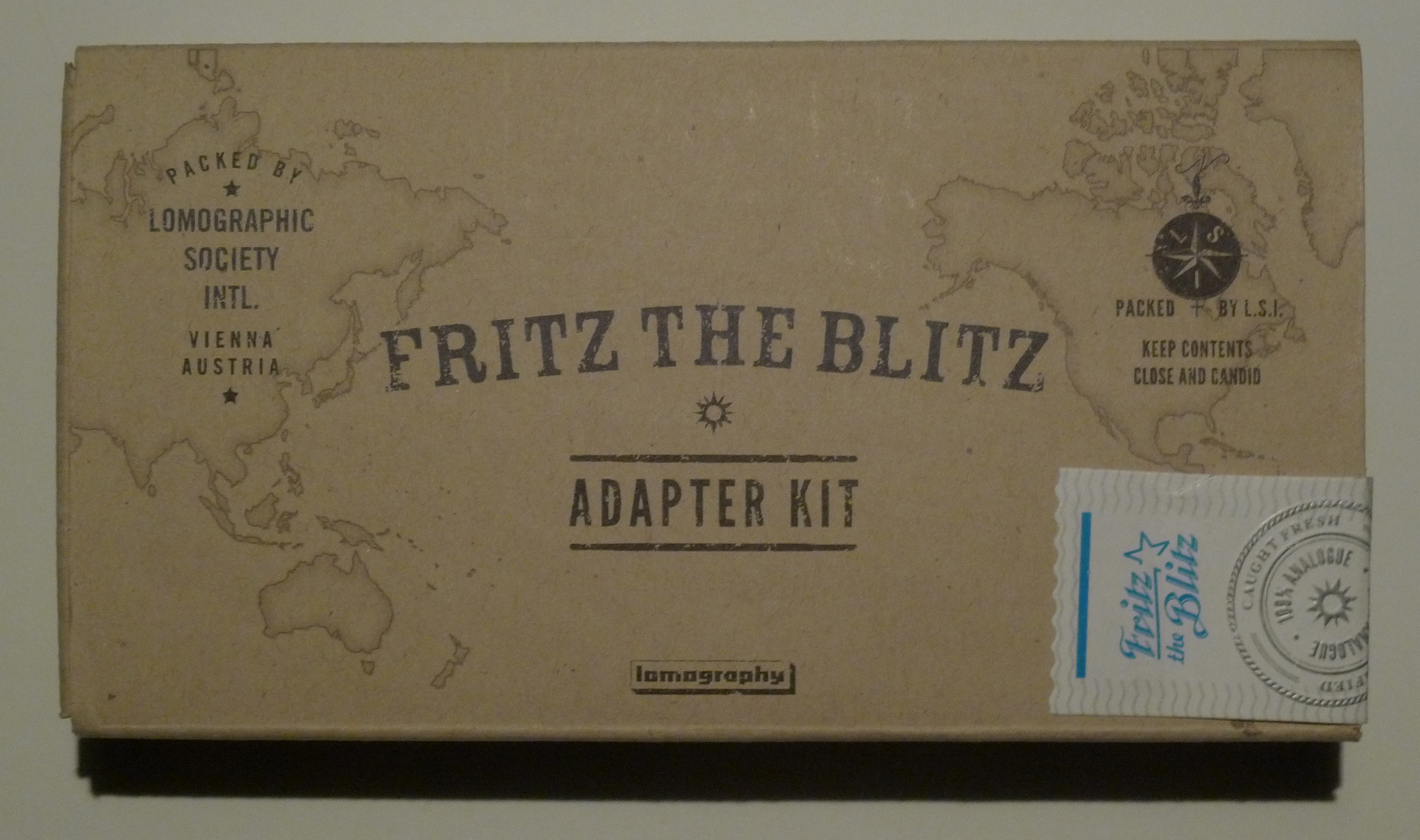
  • One Fritz the Blitz adapter kit – You’ll need the hot-shoe adapter cable and the adapter arm with the attached swivel for the flash.

Fritz the Blitz Apapter Kit

  • One #12-24 x 3/4″ machine screw and washer – Used to mount the Accu Grip in place.

#12-24 x 3/4" Machine Screw and Washer

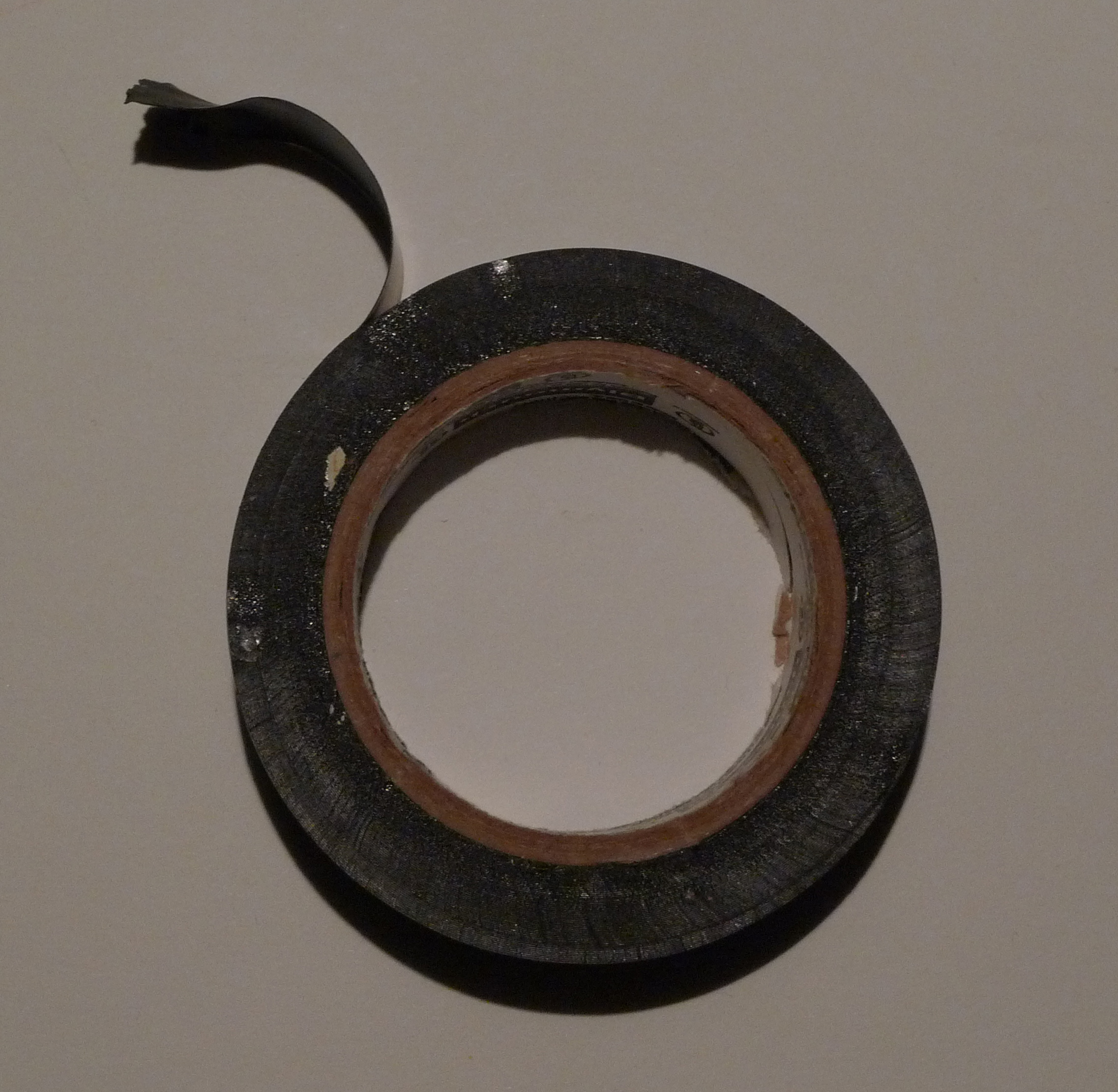
  • One roll of black electric tape – You’ll be making two washers with the plastic tape.

Electrical Tape

Tools needed are:

  • One Phillips screwdriver – For screwing the handle to the adapter arm
  • One pair of scissors – Too cut the electrical tape without stretching it
  • One very pointy object – You’ll need to punch a pencil sized hole through electrical tape
  • One drill with a step bit – You may need this particular bit to widen the hole on the end of the adapter arm if you don’t have a thin file

The Solution:

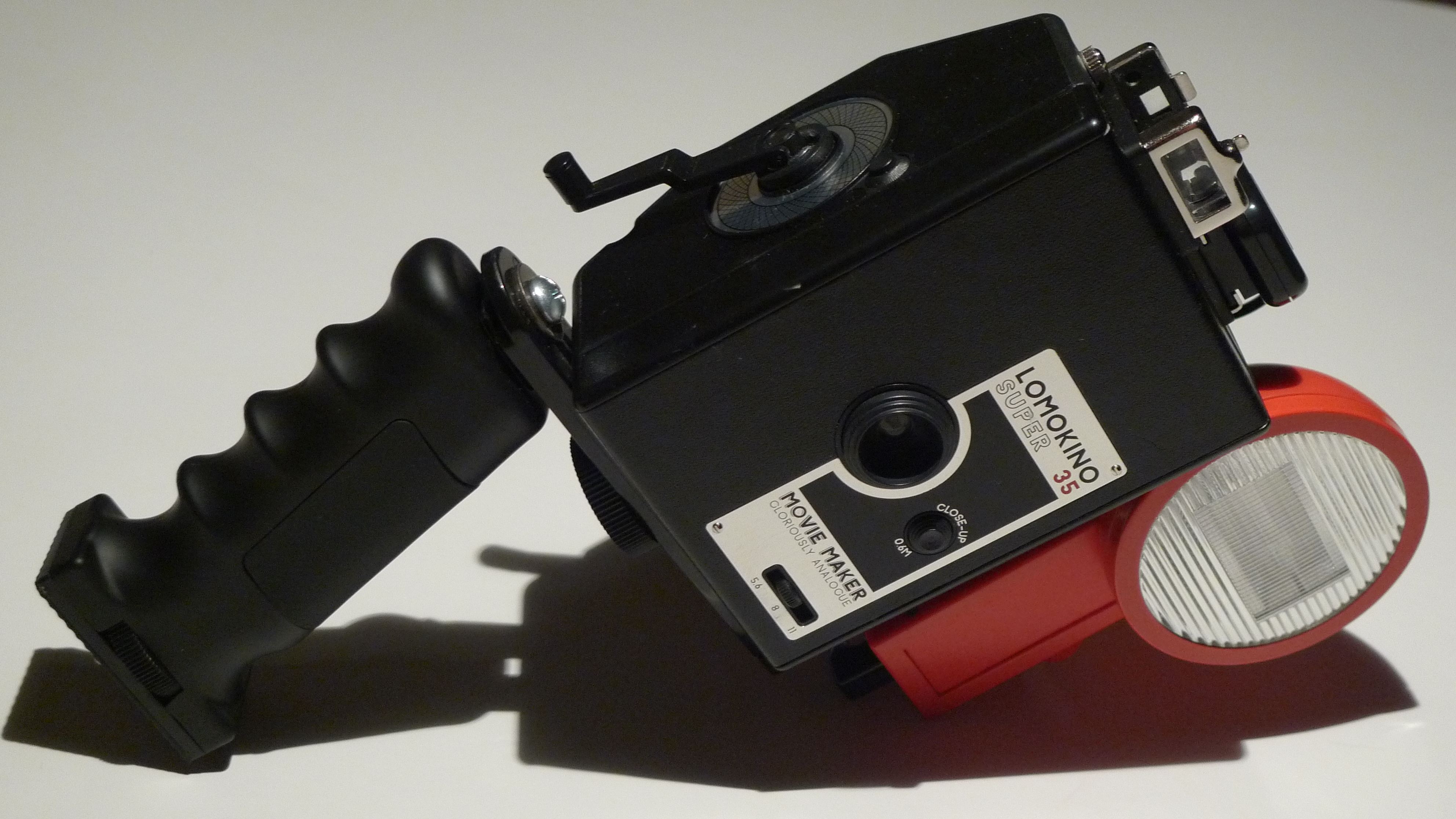
Just so you can see the finished product before the assembly notes, here’s what I ended up getting:

The finished Lomokino assembly

The Good Stuff:

This whole assembly wasn’t built step-by-step; it was built by trial-and-error.  I’ll reference the different parts of the rig according to the picture below and give you a general idea of what I had to do to put it all together.

One thing first.  Since I didn’t have any rubber washers, I had to make my own out of the electrical tape.  Till I (or you) find just the right ones, do this…

Cut out a couple of three inch pieces of electrical tape from your roll and fold the first one over itself so that you have a square.  Do the same with the other, only fold it over itself with the sticky side up.  Now punch a pencil sized hole through the center of both of them.  You’ll need these “washers” for the assembly below.

* Note that three inches of the tape is not a definite.  You may have to add or remove tape till it’s the right thickness.  It all just depends on your folding skills…  🙂

  1. The handle has to be mounted upside down, which is fine.  The built in screw on the handle wasn’t long enough to reach through the provided hole at the end of the Fritz the Blitz adapter arm.
  2. Fortunately, the other end of the handle has a hole with the right sized threading with which you can use a #12-24 3/4 screw and washer to mount the handle.  You may have to widen the given hole in the adapter to fit the bolt.  If so, be sure to use the washer so the screw head doesn’t slip through.   Also, you’ll need that “sticky” washer we made and put it between the grip and the adapter arm.  The flexibility of the tape and the stickiness of its glue will keep the handle from spinning around while your shooting.
  3. The given knob that’s used to mount the camera on the Fritz the Blitz adapter arm doesn’t fit too well in the Lomokino.  It only goes in so far.  Without the right size spacer, the camera wobbles around.  This is where the second “non-sticky” washer helps out.  Just place the washer between the camera and the adapter arm and run the bolt through it.  You won’t need too many turns to tighten it, so be gentle.  You don’t want to strip the camera’s thread.
  4. Connect the hot-shoe end of the adapter cable to the Lomokino and plug the other end into the flash.

The Finish:

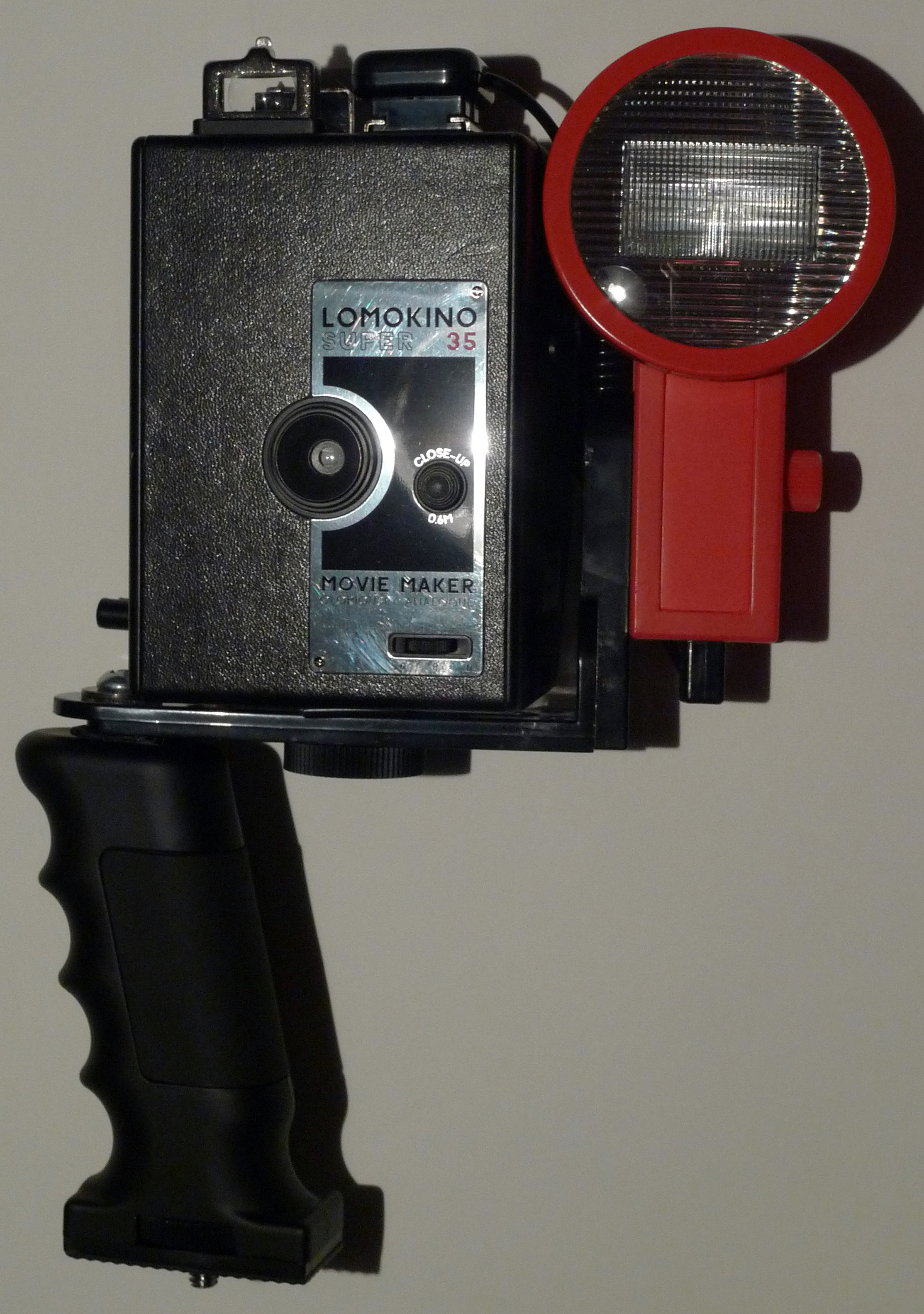
When all is done, adjust the handle so that it sits at a comfortable angle and give the screw and knob one more easy twist.  At this point you should be good to go.  Here’s what the finished rig should look like…

Positioning the camera and handle on the adapter arm this way gives me pretty decent balance as I turn the take-up crank and snap my pictures.  Also, my other hand is in a much more comfortable position as it doesn’t have to hold up the camera, the flash and the adapter arm at the same time.

Filed under: Analog Life, Reviews, Tip, , , , , ,

Lubitel 166B

How it happened

When the Lomography Store – LA announced that they were going to have a Lubitel 166+ workshop, I made it a point to attend.  I was curious as to how those big square cameras worked.

Turned out, they weren’t that bad.  They were pretty Lomographied (my own word) to the point that it was fun to use…however I wasn’t ready to drop the $350 on it.

So I turned to my friend eBay and found a vendor who was selling a ton a cameras at a pretty good price.  The only catch is that he’s in the Ukraine.  So even though the cameras were pretty well priced, the shipping was at least $20 each.  After some emailing, back and forth, he was nice enough to give me around $5 off for each camera I bought.  I checked his other listings and aside from the Lubitel 166B, I got a Kiev 4, Zorki 4 and a Smena Symbol for around $200 dollars.  Not a bad deal since the Lubitel 166B was only around $60.

Lomo Lubitel 166B

A few notes about the Lubitel 166B…

  • Manufactured by Lomo in Russia in the 1980’s
  • Lubitel is Russian for “Student”
  • They’re made of bakelite plastic material (body) and metal parts (inside)
  • The design is based on the Voigtlander Brilliant
  • It’s a TLR (Twin Lens Reflex) camera (upper glass lens if for focusing, lower glass lens has the shutter)
  • It uses 12o medium format film

A couple of differences between the Lomography Lubitel 166+ and the Lomo Lubitel 166B…

  • The Lubitel 166+ has less knobs on the outside
  • The Lubitel 166+ can shoot with 35 and 120 film
  • The Lubitel 166B has a cold shoe with a PC cable plug in the front
  • The Lubitel 166+ uses symbols to help with the F-Stops.

For the Lubitel 166B, missing some of those nice features on the newer Lubitels isn’t too bad.  I still saved about $150…and I love my Lubitel 166B.  The pictures I take with it are pretty awesome.  They’re sharper than a Holga and I feel that I have much more control over the shot.

Here are a couple of shots I took with my Lubitel 166B in Atlanta, Georgia:

The Gymnast just outside of the Georgia Dome in Atlanta

Olympic Park in Atlanta, Georgia

Pros…

I love the quality of the image.  I rarely have to touch up a well exposed frame.

The focus, aperture controls are intimidating at first, but you get used to them and you learn a lot from this type of camera.  Who needs symbols!?!  Use the Sunny 16 rule instead…

Remember, the price was still around $170 cheaper…

Cons…

The Lubitel 166B is a delicate camera.  The smaller knobs that hold the spools in place fall off and the threading inside them is easily stripped.  I’m trying to find replacement knobs for them, but in the meanwhile I use #4-40 nuts and stripped down paper clips to keep the spools in place so I can continue using the camera.

The camera case I got with it is pretty basic and a pain to put on and take off.  Use a larger camera case instead that lets you secure the camera.  Your Lubitel will love you for it.

Also, be careful with the door on the Lubitel 166B.  I added some velcro to mine to keep the door from accidentally opening.  Looks wierd, but it comes in handy.

There is no warranty for something like this.  You may have a harder time finding someone to fix it than the more modern Lomography Lubitel 166+.

Last thoughts…

I don’t regret getting the Lubitel 166B over the more expensive, yet more versatile Lubitel 166+.  I saved money on a camera that I think takes rather amazing pictures, especially since I save my Lubitel (and my other medium format cameras) for the big, artsy shots like statues, monuments and murals.  The cons list above may run a little longer than the pros, but with some knowledgeable shooting and some TLC, you’ll be glad to have gotten the Lubitel 166B.

On a side note, I’m also tempted to check out the Lubitel Universal next…  🙂

Filed under: Reviews, Russian Camera, , , , , , ,